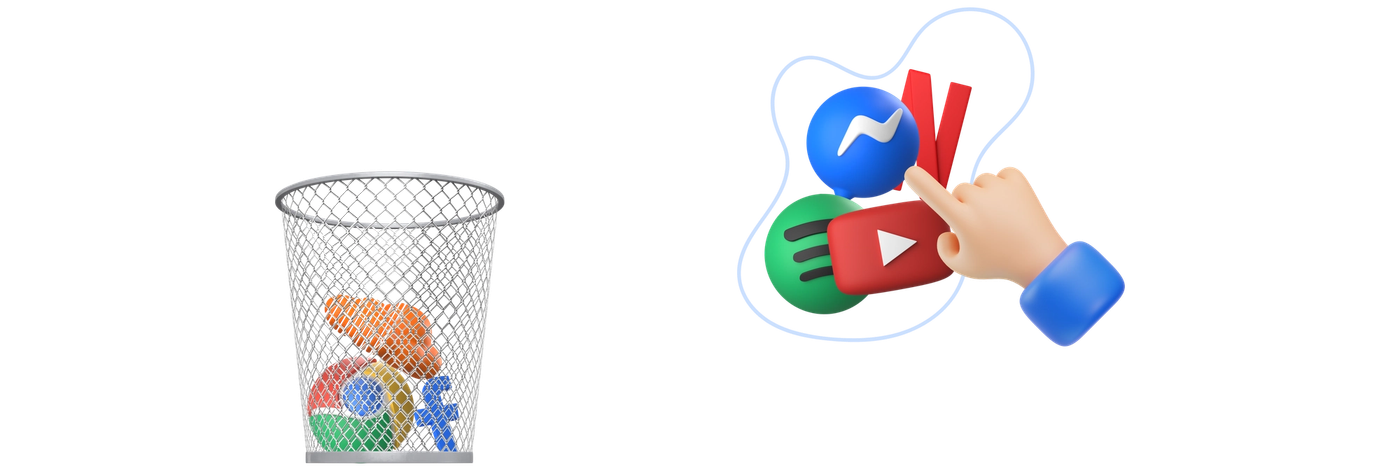

Disposable Apps, No Strings Attached

March 14, 2025 · 4 min read · Technology & Innovation · AI
(How AI is Making Software as Disposable as a Camera or a Cheap Laptop)
From Room-Sized Computers to Pocket-Sized Powerhouses
In 1945, the first programmable computer, ENIAC, was a 30-ton beast that occupied an entire room. It had 18,000 vacuum tubes, required constant maintenance, and to program it? You had to physically rewire circuits—a process that could take days just to run basic calculations.
Fast forward to today, and for just $150, you can pick up a Chromebook—a device that fits in your backpack, weighs about 2 pounds, and is millions of times more powerful than ENIAC. And unlike its ancestor, you don’t need to manually rewire anything. You don’t even need to install software—you can access an entire cloud computer from anywhere in the world.
From Bulky Cameras to Disposable Click-and-Go
A similar story happened with cameras.
In 1888, the first consumer camera, the Kodak No. 1, was a wood and metal box about the size of a large shoebox. It came preloaded with 100 exposures, but you couldn’t just snap and see your pictures. Instead, you had to mail the entire camera back to Kodak, wait weeks for them to develop your photos, and then they’d send you prints along with a reloaded camera.
Now? You can walk into a pharmacy, grab a disposable camera for $15, click away instantly, and get your pictures developed within an hour. No waiting. No shipping. No bulky wooden boxes.
Oh, and You Can Do All of That With Your Phone.
Want to run complex calculations? Your phone does that instantly.
Want to edit and share a photo? Done in seconds.
Want to connect to a cloud computer, create a document, or translate languages on the fly? Your phone handles all of it effortlessly.
A device that sits in your pocket and goes everywhere with you has replaced entire rooms of computing power and bulky camera equipment.
But here’s where things get even more interesting. It’s not just about hardware anymore. Software is becoming disposable, too.
From "Months of Development" to "Apps on Demand"
Think about how software used to be made:
- Months of design and planning
- Weeks of coding and testing
- A long approval process
- Bug fixing, updates, and maintenance
And all of that effort just to create an app that people might use for a few minutes before deleting.
But now? We don’t even need to keep apps anymore. We can generate them on demand.
The Rise of Disposable Apps
Imagine you’re traveling to South Korea and need to ask for directions. Instead of downloading a full language-learning app, you simply ask AI to create a quick Korean translator. It generates an app that phonetically spells out words so you can pronounce them correctly. You use it once, and then it’s gone.
Or you have an Excel sheet full of raw data, and instead of learning complex data visualization tools, you just ask AI to generate an interactive graph. You use it for five minutes, get your insights, and then discard the app—no installs, no subscriptions, just instant functionality.
AI: The New Disposable Software Factory
Just like cameras became instant and computers became portable, software is now becoming disposable.
With AI, apps are no longer something we download and store. They are built in real time, used, and discarded—just like a disposable camera.
What’s Next?
Think about it—we used to need separate devices for everything.
A camera for taking pictures.
A computer for work and calculations.
A mailbox for sending letters.
Now? It’s all on your phone.
So, what if the same thing happened to apps?
What if instead of needing one app for messaging, another for photo editing, another for work, and another for calculations, you just had one AI-driven app that became whatever you needed in the moment?
- A camera when you need to take a picture.
- A messaging app when you need to connect with someone.
- An advanced calculator when you need to do your taxes.
- A translator when you're traveling abroad.
All in one single app, generated on demand, disappearing when you’re done.
Would we even need an App Store anymore? Would we own software, or would we simply summon it when needed?
If your phone replaced dozens of devices, what happens when AI replaces dozens of apps?